
Over the past decade, bots have become embedded in modern software development. Yet empirical evidence suggests many bots fail to achieve sustained adoption and trust. Further, these traditional automation systems will continue to become obsolete with the rise in adoption and capabilities of generative AI agents. Drawing on recent research on bots and real-world development workflows, this keynote will explore the "fall off" by characterizing the shortcomings of bots, relating it to the come up of AI agents in software engineering contexts, and discussing implications for the next generation of bots, agents, and research.
Dr. Chris Brown is an Assistant
Professor in the Department of Computer Science at Virginia Tech. His research combines
empirical methods, human-centered studies, interdisciplinary concepts, and automated tools
to equip developers with evidence-based tools and practices that improve programming
behaviors, boost productivity, and support better decision-making—ultimately
contributing to more effective and trustworthy software development.
He leads the “Code World, No Blanket” research group at Virginia Tech, and has
published widely in top-tier venues such as ESEC/FSE, MSR, SANER, ICSE, etc. His
contributions on bots, agents, and digital nudges for software engineering have gained broad
recognition, including a Google Research Award and multiple Commonwealth Cyber
Initiative (CCI) grants supporting projects on privacy, developer support, and
software engineering interventions.
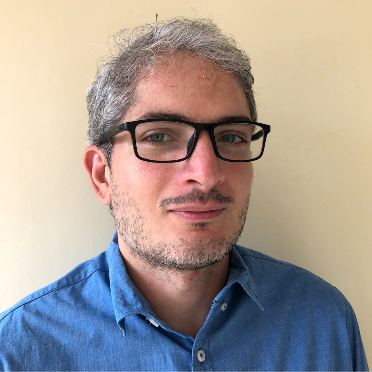
Building and deploying internal coding agents in enterprise software teams remains difficult, especially when moving beyond prototypes into daily developer workflows. This is a problem because technical performance alone is not enough: integration constraints, trust, evaluation, and adoption dynamics often determine whether these agents create real value. In this talk, we will drive into Zup's experience in building its own coding agent. As we discovered, some of the hardest blockers are not in code generation itself, but in the socio-technical design choices required to make an agent reliable, usable, and governable in practice. These lessons point to a broader research agenda for software engineering, with concrete opportunities to study how coding agents should be designed, evaluated, and introduced in real organizations.
Dr. Gustavo Pinto is an assistant
professor at the Federal University of Pará, Brazil and Senior Staff at Zup
Innovation, a Brazilian tech company. He holds a PhD in Software Engineering from the
Informatics Center at the Federal University of Pernambuco, Brazil. He has very broad
interests in Software Engineering, including Open Source Software (communities and
contributors), Human Aspects of Software Engineering, Empirical Software Engineering, and
Mining Software Repositories techniques.
He has published over 100 research papers, some of them in the most important venues in his
field (e.g., ICSE, ASE, CSCW, TSE, CACM, etc). He won several international research and
service awards, including the MSR Ric Holt Early Career Achievement Award in 2022,
one ACM SIGSOFT Distinguished Paper Award in ICSE 2021, and one JSS Paper of
the Year in 2019. He also writes regularly at his ML4SE newsletter.
Mon 13 Apr | Windsor Barra Hotel, Rio de Janeiro, Brazil
Bots (short for software robots) are software applications that perform often repetitive or simple tasks. In particular, social and chat bots interacting with humans are a recent research topic. Similarly, bots can be used to automate many tasks that are performed by software practitioners and teams in their day-to-day work. Recent work argue that bots can save developers' time and significantly increase productivity. Therefore, the goal of this one-day workshop is to bring together software engineering researchers and practitioners to discuss the opportunities and challenges of bots in software engineering. We solicit 6-page work in progress papers, position papers, and experience reports. Work in progress papers are expected to describe new research results and make contributions to the body knowledge in the area. Position papers are expected to discuss controversial issues in the field, or describe interesting or thought provoking ideas that are not yet fully developed. Experience reports are expected to describe experiences with (amongst other things) the development, deployment, and maintenance of bot-based systems in the software engineering domain. We have also included 5-page extended abstract publications free of APC charges that will appear as extended abstracts in the proceedings. All submissions will be reviewed by at least three program committee members. Accepted submissions will be invited to give a talk to present their findings.
All deadlines are firm at the Anywhere on Earth (AoE):
Submissions should be made via HotCRP
by the submission deadline.
All submissions must be in PDF format and conform, at the time of submission, to the
official ACM Primary Article Template, which can be obtained from the ACM Proceedings
Template page.
LaTeX users should use the sigconf option and the review
option to produce line numbers for reviewer reference. The following LaTeX code should
be placed at the start of the document:
\documentclass[sigconf,review]{acmart}
Submissions must not exceed 6 pages, including all text, figures, tables, and
appendices; one additional page containing only references is permitted.
By submitting to BoatSE 2026, authors acknowledge awareness and agreement with the ACM Policy and
Procedures on Plagiarism and the IEEE
Plagiarism FAQ.